Choosing a wealth manager is one of the most important financial decisions high earners can make. With millions of dollars potentially at stake over your lifetime, finding the right registered investment advisor (RIA) can mean the difference between reaching your goals and falling short.
J.E. Simmons and Company helps high-income business owners coordinate tax strategy, investments, and retirement planning into one cohesive approach. This article walks you through the essential criteria to consider when evaluating wealth management firms, so you can make a confident decision about who should guide your financial future.
Whether you're a physician, business owner, or executive, the right wealth manager should integrate investment advisory services with tax planning and long-term retirement strategy. Let's explore what to look for and how to evaluate your options.
Key Takeaways: How to Choose a Wealth Manager for High Earners
- Verify that your advisor operates as a fiduciary, meaning they must put your interests ahead of their own.
- Understand fee structures fully—percentage of assets, flat fees, or hourly rates—and how they affect your returns.
- Ask about integrated tax planning, not just investment management, for coordinated financial decisions.
- J.E. Simmons and Company offers fee-only fiduciary advice with coordinated tax, investment, and retirement planning.
- Evaluate credentials like CFP® and CPA designations to ensure technical expertise matches your needs.
What Is a Registered Investment Advisor (RIA)?
A registered investment advisor, or RIA, is a firm registered with the Securities and Exchange Commission (SEC) or state regulators. RIAs have a fiduciary duty to act in their clients' best interests, which means they must avoid conflicts of interest when making recommendations.
This differs from broker dealers, who are only required to recommend investments that are "suitable" for you. The fiduciary standard is higher and offers stronger protection. When evaluating wealth management firms, confirming RIA registration is a critical first step.
This distinction significantly impacts the quality of advice you receive, especially when managing substantial assets.
Why Fiduciary Status Matters for High Earners
High-income professionals face financial complexities that demand unbiased guidance. A fiduciary wealth manager cannot earn commissions from selling products or recommend investments that benefit their firm at your expense.
This alignment of interests becomes especially important when your financial decisions involve business ownership, equity compensation, or multi-generational wealth transfer. You need an advisor who sees the full picture—not just one who sells investment products.
Key Criteria When Evaluating Wealth Management Firms
When comparing wealth management firms, look beyond brand recognition. Consider these core factors:
Integrated Planning Services
The best wealth managers coordinate investment strategy with tax planning, retirement projections, and estate considerations. This integrated approach prevents gaps and missed opportunities that occur when you work with disconnected professionals.
Professional Credentials
Look for advisors holding Certified Financial Planner (CFP®), Certified Public Accountant (CPA), or Chartered Financial Analyst (CFA) designations. These credentials indicate rigorous training and commitment to ethical standards.
Client Profile Match
Choose a firm experienced with clients in similar financial situations. A wealth manager who regularly works with business owners or high-income professionals will better understand your unique challenges.
How Fee Structures Impact Your Long-Term Results
Fee transparency is essential when selecting a wealth manager. Fees compound over time, and even small differences can significantly impact your long-term wealth accumulation.
Common fee structures include:
- Percentage of assets under management (AUM): Billed directly to the accounts based on the size and cost
- Flat fees or retainers: Fixed annual amounts regardless of portfolio size
- Hourly rates: Pay for advice on a per-hour basis
Ask every prospective advisor for a complete breakdown of all fees, including fund expenses and trading costs.
Questions to Ask Before Hiring a Wealth Manager
Going into your first meeting prepared helps you identify the right fit. Consider asking these questions:
- Are you a fiduciary at all times?
- How do you get compensated, and are there any commissions involved?
- What is your experience working with clients in similar financial situations?
- How do you coordinate with CPAs and estate attorneys?
- What is your investment philosophy and approach to risk management?
- How often will we meet, and what does ongoing communication look like?
These questions help reveal whether an advisor can deliver the coordinated, personalized service high earners require. At J.E. Simmons and Company, clients receive direct access to CPAs and CFP® professionals who work together on every planning decision.
The Role of Tax Planning in Wealth Management
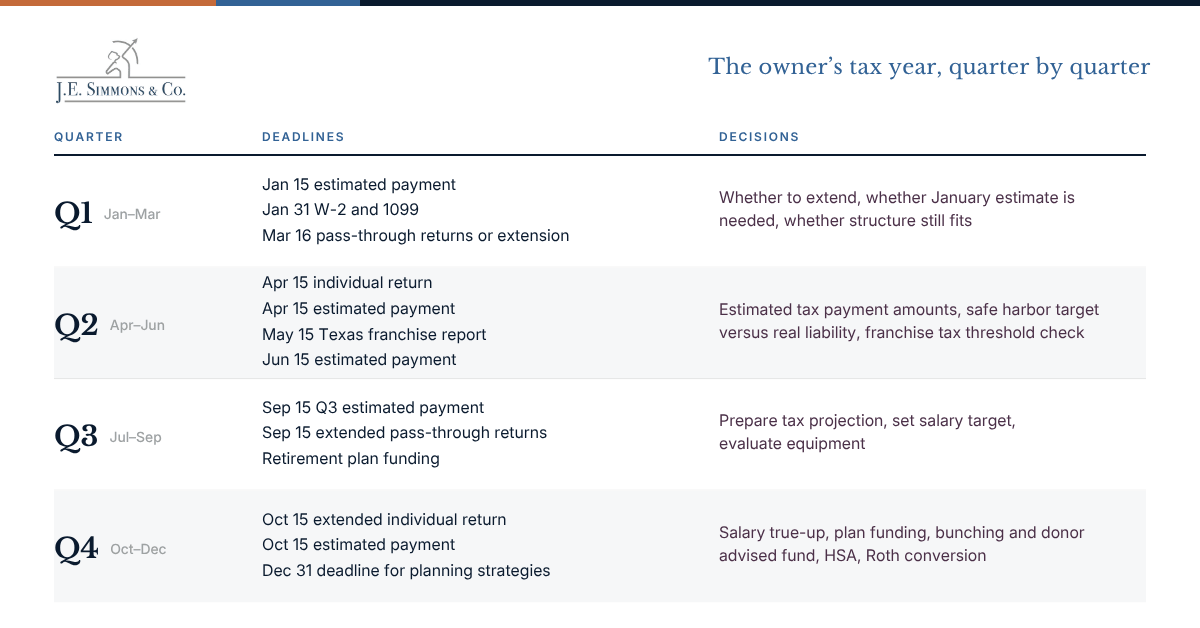
For high earners, tax planning often matters more than investment selection alone. A skilled wealth manager incorporates proactive tax strategies throughout the year—not just during tax season.
Effective tax-aware planning includes asset location (placing investments in accounts with favorable tax treatment), tax-loss harvesting, Roth conversion analysis, and planning for estimated payments and deductions.
J.E. Simmons and Company integrates tax planning directly into investment management, helping clients reduce income tax liability while optimizing retirement savings. This coordinated approach creates value that investment-only firms cannot match.
In Conclusion: Finding the Right Wealth Manager for Your Goals
Choosing a wealth manager requires careful evaluation of fiduciary status, fee structures, credentials, and service integration. High earners benefit most from advisors who coordinate tax strategy, investment management, and long-term planning into one coherent framework.
By asking the right questions and understanding what distinguishes top-tier wealth management firms, you can make a confident decision that supports your financial goals for decades to come. Start by verifying fiduciary status, understanding all fees, and confirming the advisor has experience with clients who share your financial profile.
FAQs About How to Choose a Wealth Manager for High Earners
What is the difference between a fiduciary and a suitability standard?
A fiduciary must put your interests first and avoid conflicts of interest. The suitability standard only requires recommendations be appropriate—not necessarily optimal. Choosing a fiduciary wealth manager gives you stronger protection when making major financial decisions.
How much should I expect to pay for wealth management services?
J.E. Simmons and Company operates on a fee-only model with transparent pricing, so you always know exactly what you're paying for advice.
What credentials should a qualified wealth manager hold?
Look for designations like Certified Financial Planner (CFP®), Certified Public Accountant (CPA), or Chartered Financial Analyst (CFA). These credentials indicate advanced education and adherence to ethical standards in financial planning and investment management.
Why is integrated tax planning important for high earners?
Tax planning can have a larger impact on wealth accumulation than investment returns alone. J.E. Simmons and Company coordinates tax strategy with investment decisions throughout the year, helping clients maximize after-tax returns and reduce unexpected liabilities.
How often should I meet with my wealth manager?
Most wealth management relationships include quarterly reviews and annual strategy sessions, with additional meetings around major life events or market changes. J.E. Simmons and Company delivers coordinated advice through annual reviews and quarterly check-ins, ensuring your plan stays aligned with your goals.
Disclosure
The content and information presented herein are for educational purposes only and should not be construed as a solicitation or offer to buy or sell any investment services. Nothing contained in this material should be considered an offer to provide any product or service in any jurisdiction that would be unlawful under the securities laws of that jurisdiction. The information contained herein has been obtained from sources believed to be reliable; however, the Firm does not guarantee accuracy or completeness of the information. Such information is subject to change at any time without notice. Before taking any action, you should consult with a qualified tax, legal, or financial professional.